
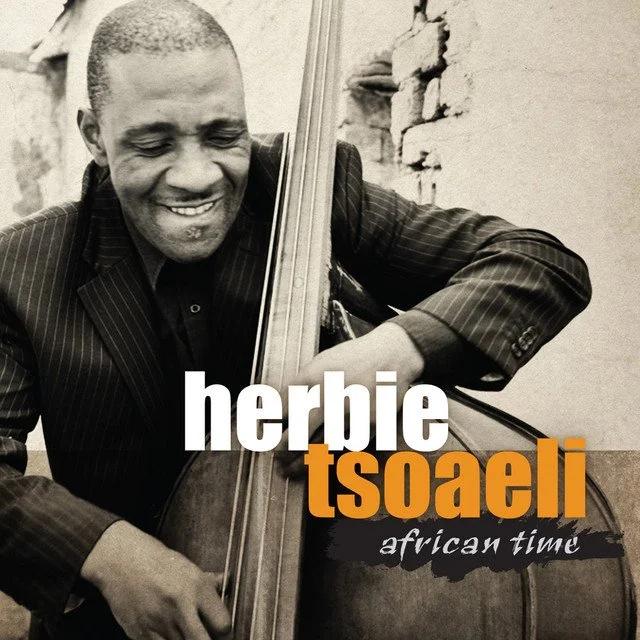
African Time is the debut jazz album released by the great Herbie Tsoaeli in 2012. It won a SAMA Award for Best Jazz Album in 2013. Prior to this release, Herbie had worked on multiple other projects from partnerships with Bono, performing at the King’s Trust Concert In Eswatini as Eric Clapton’s supporting act and touring the United States and Europe with Zim Ngqawana as well as sharing a stage with Keith Tippet.
Herbie’s music is very themed and specific, and beneath this theming lies a strong foundational understanding of music and time, instruments and their use in context, and how that time and context affects how much of an emotion a song can express.
Throughtout the project, Herbie mentions themes of family, the strifes and struggles of life, ubuntu, and God. It also evokes familiar feelings, which a lot of people could resonate with: a feeling of being ekhaya with gogo, a feelings of longing and going through hardships. Nevertheless, it manages to feel fresh and relatable.
Herbie begins this journey with Hamba No Malume, which expresses feelings of grief for his uncle, who the song is dedicated to. A reminder to appreciate those close to us. On certain tracks, there are undertones of looking back to a past youth, while other tracks show an appreciation of experience and the hardships that come with it; a perspective that makes sense for Herbie. He uses his voice in such a piercing yet subtle manner, as if it is a completely separate instrument. He creates a moment and vocally expresses it in a distinct and vivid way most artists cannot. On Track 1, you can practically cut through the emotion he creates with his voice. You are enveloped by the grief of missing his uncle, a person he can no longer see, hold nor walk with. He also does this on Kerekeng, a song dedicated to his grandmother’s teachings. A great, beautiful song with the saxophone playing like it had a voice of its own.
Indlal’ibhokile is another outstanding track – it creates such a beautifully chaotic and timeless sound, expressing the hardships of unemployment and the struggles of job hunting to no avail. Something both young and old can resonate with, especially in current times. This track is a perfect encapsulation of frustrations in situations of helplessness. The screaming saxophones do an amazing job in amplifying the chaos. The hulking and grunting trombone, the frantic piano and the clamours of the unrelenting percussion just keep adding on this thunderous and unforgiving sound. So, so well done. This also goes to prove how skilled Herbie is when it comes to arrangement.
“Sukuma siyisebenzele i-Africa yethu.” Herbie understands and emphasizes the importance of unity in working towards the development and growth of Africa and Africans themselves. On Asiyibambeni Sonke he stresses the repercussions of not holding on to each other, praying together. Throughout the years it has felt as though the idea of ubuntu keeps slowly slipping from Africans and Herbie recognized that and pleads that we go back to working together and depending on each other.
Although this project is from Herbie’s own perspective, memories and idealogies, it does not fail to create a relationship with the listener. It does not create a definitive gap between the listener and the artist. Neither does it try to be self-righteous, which was a great artistic choice by Herbie. As much as individuality is important, it is great to have such beautiful works of art that brings people together through shared experiences.
