
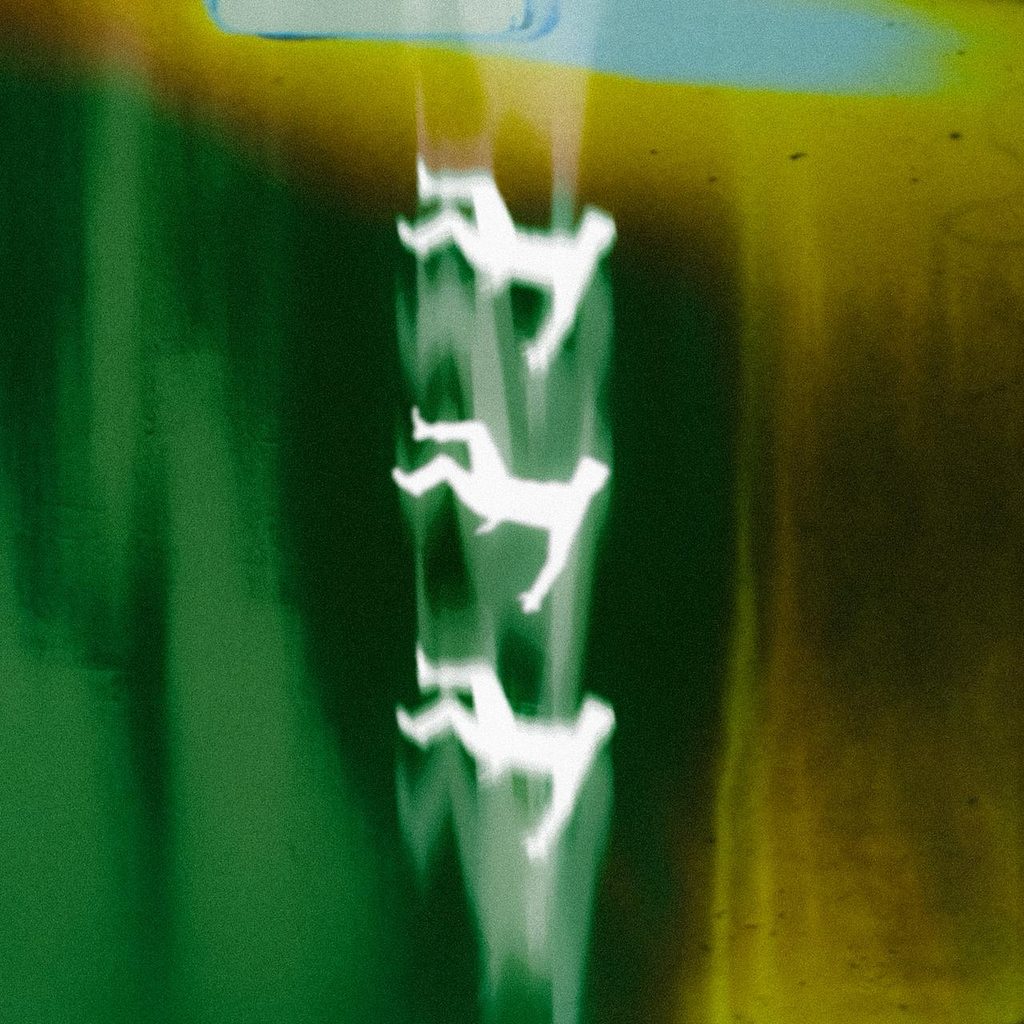
Somnambulant (adj): Walking or having the habit of walking while asleep; alternatively, it can mean resembling or having the characteristics of a sleepwalker. Sleepwalking is a parasomnia that occurs during the deepest parts of non-rapid eye movement (NREM) sleep. The parts of the brain that control movements stay awake, while the faculties responsible for memory and logic stay asleep. Consciously or unconsciously, we are all in a state of somnambulance, always awake but not aware, passively letting life come at us.
Unemployment, inflation, famine, genocides in Palestine, Congo and Sudan, wars in Ukraine and Iran, and the perpetual carousel of online discourse has garnered an odor of pessimism, which along with some algorithmic conditioning and a collective passive consciousness (somnambulance) has chipped away at our agency, our hope and our ability to dream. The American Psychological Association describes pessimism as the attitude that things will go wrong and that people’s wishes (or dreams) are unlikely to be fulfilled. One study¹ defines pessimism (and optimism) largely through expectations about the future. Another study² examines pessimism as an indicative style – individuals will interpret negative events as internal, permanent and universal. Pessimism is a reaction to the environment around an individual or a population; it is not difficult to imagine how one would be the resident party pooper when we are economically insecure, still fighting for racial equality and equity and experiencing political instability, all the while the news feed churns out story after story, disaster after disaster, not letting us examine one injustice before moving onto the other. The insidious thing about pessimism is that it rarely ever announces itself. It does not always look like dread, sometimes it is merely indifference. Because what is the point? There will be another war, another recession, another corruption case and all you can do is wake up, go to work, survive, repeat. Before long, it stops feeling like an emotion but rather common sense, and when enough people start thinking it is common sense, it stops being personal and starts being cultural. Before long, we are somnambulant and the unsettling thing about sleepwalking is that the sleepwalker rarely chooses the direction in which they wonder; instead, they are guided by whatever is in front of them. And what greater chaperone than the one thirty centimeters from our faces.
Before all else, no, we are not being mind controlled by our cellphones; no, we are not being mind controlled by the algorithms, and no, we are not being mind controlled by the billionaire class. However, everyday we are online there is an invisible hand that decides what appears in front of us: which story deserves our attention, which stranger deserves our anger, which catastrophe we must fear, and which opinion to hate. This hand – our feed – is only concerned with how it can continue to make us consume, how it can keep us fed. Algorithms are optimised for attention and engagement; anger, fear, conflict, and outrage are extraordinarily effective at producing attention. Research³ was conducted on actual users of X, formerly Twitter, where some of them were put on the platform’s algorithmic feed and others on the chronological feed. After seven weeks it was found that switching people onto the algorithmic feed increased engagement and shifted political opinions in a more conservative direction. The researchers also found that the algorithm promoted more conservative content which in turn made users follow more conservative activist accounts
Another study⁴ on YouTube’s recommendation system says while they did not find a simple progression toward increasingly extremiste ideological content, “the user may encounter videos that promote conspiracy or misinformation, among other problematic messages deeper in the recommendation trail” and that the “audit suggests the presence of right-wing bias in YouTube’s algorithm”. They found that YouTube tended to recommend content ideologically congenial and that this effect became stronger deeper into the recommendation trail for right-leaning users. So while left and centre-leaning users get correlating content, right-leaning users are pushed even further right and are more likely to receive extremist content. The point I am trying to get at here isn’t that algorithms are brainwashing the masses, rather that they influence the environment in which people think – even when their influence does not automatically determine what people think. My point is that algorithms foster our collective pessimism. They facilitate an environment of Somnambulance. Instead of being the lantern that illuminates our way back to our bed, they keep us walking, and sometimes even remove otherwise important obstacles. They make the path of least resistance the one we follow, feeding us the angriest argument, the most frightening headline, the most humiliating failure, the most enviable life. The good thing about sleepwalking, however, is that it does not last forever. At some point we have to go back to bed and dream.
Dream (n): a series of thoughts, images, or emotions, occurring during sleep. While dreaming may occur at any stage during sleep, they are their most intense during rapid eye movement (REM) sleep. Dreams during REM sleep generally are more abstract, vivid, and/or bizarre, while in contrast, NREM dreams tend to be more grounded in thoughts or memories specific to a time and a place. Chronologically, our most impactful dreams happen after we sleepwalk.
Appropriately, the optimist is the opposite of the pessimist. They do not pretend like everything is fine, instead optimising¹ is a variable that reflects the extent to which people hold generalised favourable expectations for their future. Optimists have higher levels of engagement and lower levels of avoidance. They have greater persistence, greater engagement to problems and are associated with better emotional adjustment, physical health and general well-being. This is as far as my understanding of optimism takes me though, because I have not been an optimist. I have been somnambulant. While I lack the platitudes and experiences of what it takes to be optimistic, I know what it feels like to dream. Toro is a band of dreamers, which for me anyway, came at a time when all I was doing was sleepwalking. With Toro, I am confronted with individuals who are more engaged than myself, more politically sound and more hopeful; which I think is more powerful than optimism. It is because of this band of dreamers that I myself have begun to dream, to push myself into engagement. Dreaming in this sense is an act of resistance against the idea that whatever currently exists is all that can exist. But it is not enough to merely dream. We have to wake up. Because “dreams come true when you don’t sleep”. We have to wake up from the pessimism, the endless feed, the belief that the world is far too large and that we are far too small to impact it. Because dreaming is not the opposite of being awake, it is maybe its truest form. We dream because we are awake enough to recognise that something is missing, and we are hopeful enough to imagine what might fill the gap. We – I have spent too long sleepwalking in a world that has made it increasingly easy to do just that. I – we – should start to dream.

1 thought on “Walkers”
Great in sight